As electric vehicles (EVs) transition from early adopter anomalies to mainstream consumer choices, the demand for reliable, cost-effective infrastructure has shifted significantly toward private residential environments. Industry data indicates that over 80% of all electric vehicle charging occurrences take place overnight at home. This structural reality has propelled the "Home Charging Kit" from a simple accessory to a critical, highly sophisticated household appliance that acts as the gateway between the domestic energy grid and the battery systems of tomorrow's electric fleets.
Globally, regulatory frameworks are aggressively forcing this transition. In Europe, the Energy Performance of Buildings Directive (EPBD) mandates prepiping and pre-wiring for charging infrastructure in new residential constructions and renovations. Meanwhile, in North America, municipalities are modifying local building codes to include "EV-ready" requirements. Under these macro-market forces, automotive manufacturers, utilities, property developers, and electronics distributors are seeking reliable manufacturing partners who can design, refine, and scale OEM and ODM residential charging kits.
Navigating this space requires more than basic electrical knowledge; it demands advanced integration of hardware ruggedization, local utility compatibility, dynamic power allocation, and compliance with varying international regulations. To achieve long-term success, brands must deploy solutions that satisfy not only today’s basic charging needs, but also integrate seamlessly with localized home energy management systems (HEMS), micro-renewables (such as solar photovoltaics), and bidirectional vehicle-to-home (V2H) communications protocols.
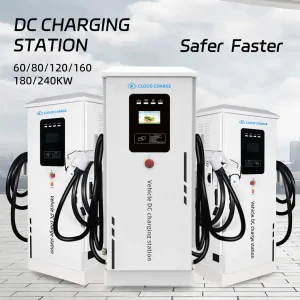
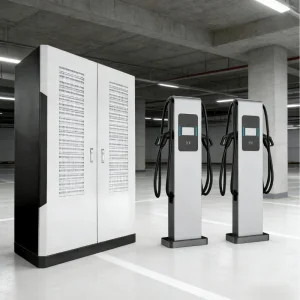
Guangzhou Amp Link Charger Co., Ltd. is a leading high-tech enterprise from China, specializing in the production, research, and sales of electric vehicle charging equipment. Our comprehensive product portfolio includes home AC charging stations, portable AC chargers, and DC fast charging stations.
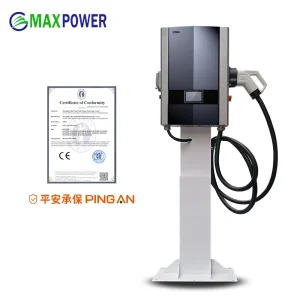
Our corporate goal is clear: to build a first-class enterprise and create an international brand. Through our continuous and unremitting efforts, we have now exported our products to more than 20 countries, such as the United States, the United Kingdom, Germany, and France. Our products have passed CE, CQC, and other domestic and foreign authorities issued by the quality inspection certification, and the application of a number of invention patents in the product.
By leveraging our deep engineering background, Amp Link is uniquely positioned to handle massive OEM and ODM request cycles. We address the unique barriers our clients face: importing to highly regulated markets, customizing enclosures and software interfaces, and engineering customized PCB solutions tailored for specific load control requirements.

To capture market share in residential charging, enterprise purchasers require modular structures. Single-model approaches cannot address the fragmentation of global grids, structural differences in residences, or brand identities. Successful deployment requires a choice between White-Label Manufacturing (OEM) and Design-Driven Engineering (ODM):
Custom shell materials (anti-UV polymers, flame retardants, metals), laser-etched logos, color schemes matching corporate branding, customized cable lengths (5m to 10m), plug configurations (Type 1, Type 2, GB/T, NEMA connectors), and personalized retail/B2B packaging.
Customized mainboards (PCBA) configured for specific peak currents, integration of custom energy meters (MID certified), localized radio systems (Wi-Fi, Bluetooth, 4G LTE-M), and proprietary protocols inside the microcontrollers.
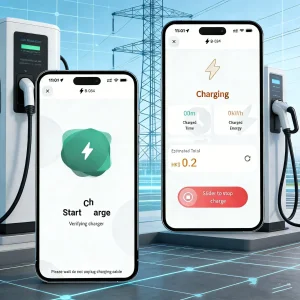
OCPP (Open Charge Point Protocol) 1.6J and 2.0.1 implementation, allowing connection to proprietary backends, personalized EV Driver Mobile Apps (iOS and Android SDK integration), RFID/NFC card authentication configurations, and over-the-air (OTA) firmware upgrade cycles.
By managing both paths, we minimize time-to-market. Clients receive a verified technical stack, allowing them to bypass years of R&D, prototype validation, and certification cycles.

At Amp Link, we believe safety is the paramount directive in high-voltage consumer electronics. The company attaches great importance to quality and technology. Each product undergoes rigorous testing and verification before entering the market.
We promise that all product components are sourced from strictly vetted, premium suppliers. The company conducts regular audits on marketed products to maintain standard quality and eliminate shortcuts. Whether you are a long-term partner or contacting us for the first time, your inquiries will receive quick responses. Our support structures ensure that any technical issues are followed up by professionals until resolved.
Our quality control protocols extend to our raw materials, where we inspect all relays, current transformers, structural polymers, and communications modules to meet strict quality gates before they reach the assembly line.
Deploying a home charging kit today requires planning for tomorrow’s grid. Smart homes are evolving into microgrids containing solar panels, stationary storage batteries, heat pumps, and electric vehicles. The technical roadmap of modern EVSE (Electric Vehicle Supply Equipment) is defined by three main integration points:
Standard residential electrical feeds are limited. Activating a 22kW charging station alongside an electric oven and HVAC unit can exceed the home's total current allocation. Our systems use Dynamic Load Balancing. By placing external current transformers (CT clamps) or smart energy meters at the main breaker panel, the charger reads total home consumption in real-time. It automatically adjusts the charging current (e.g., throttling from 32A down to 10A) to prevent tripping the main circuit breaker, restoring full charging speed when household demand drops.
Charging an EV with grid power can be costly and carbon-intensive. Our systems feature solar integration protocols. Through RS485 Modbus or TCP/IP connections to home solar inverters, our chargers offer specialized operational modes:
The future of home power rests on bidirectional energy flow. Following standard ISO 15118-20 specifications, our advanced product designs lay the foundation for Vehicle-to-Home (V2H) and Vehicle-to-Grid (V2G) systems. This allows the EV to act as a battery backup, powering the home during blackouts or discharging energy to the grid during peak tariff periods.
Electricity grids differ significantly by region. A standardized home charging kit cannot be deployed globally without adjustments. Our OEM/ODM engineering services address these regional variations directly:
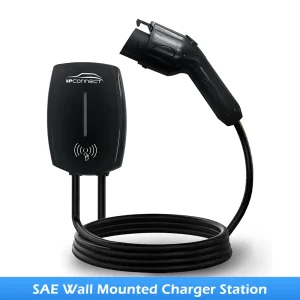
Requires split-phase electrical architecture (120V/240V). Chargers must meet UL 2594 safety standards and feature Type 1 (SAE J1772) connectors. Units are often configured for NEMA 14-50 plug-in installations or direct hardwiring, supporting 32A to 48A output.
Operates on single-phase (230V) or three-phase (400V) grids. Standards mandate Type 2 (IEC 62196) sockets or tethered cables. Integral protection requirements include 6mA DC leakage protection, eliminating the need for expensive Type B RCDs in the electrical panel.
Covers varied infrastructure systems, from Chinese GB/T standards to regions in South America and Southeast Asia requiring CE components but adapted for wider voltage fluctuations and high-humidity IP54/IP55 protection ratings.
By providing flexible configuration options for PCBs and enclosures, we help brands quickly comply with local grid codes, avoiding expensive redesigns.
For high-volume customers like property developers, large fleets, and power utilities, home charging kits must integrate into broader commercial frameworks:
Multi-family structures require shared power management. Our systems use local network hubs to balance load across up to 32 chargers connected to a single supply node. Integrated NFC/RFID access controls prevent unauthorized use, and built-in energy meters simplify billing.
As corporate fleets transition to electric, drivers charge their company vans and cars at home. Our OCPP-compliant firmware integrates with fleet management platforms, tracking the exact energy consumed by the vehicle at home for direct employee reimbursement.
Electricity providers use charging networks to balance grid load. Using API integrations and OCPP 1.6J/2.0.1, utilities can temporarily throttle charging speeds during peak grid loads, offering lower tariffs to users who opt into demand-response schemes.
Single-phase home charging kits operate on one phase (typically 230V in Europe or 240V in the US) and provide up to 7.4kW of power at 32 Amps. Three-phase charging kits divide the current across three separate paths (400V), supporting 11kW or 22kW charging speeds. While single-phase setups are standard in North America, three-phase connections are common in European residential properties.
Our products undergo full certification processes. In North America, our designs comply with UL 2594 and UL 2231 standards. In Europe, they bear CE markings and comply with the Radio Equipment Directive (RED), Low Voltage Directive (LVD), and electromagnetic compatibility (EMC) regulations, as well as IEC 61851 safety standards.
Yes. Our standard firmware is built on OCPP 1.6J (JSON over WebSockets) and is upgradeable to OCPP 2.0.1. We configure connection profiles, security certificates, and boot messages to connect directly to your custom backend or fleet management system.
Our safety architecture includes multi-point temperature monitoring. Thermal sensors on both the PCB and inside the charging gun plug monitor temperature rises. If temperatures exceed 80°C, the controller automatically reduces the current; if temperatures exceed 85°C, charging halts immediately. The system also includes integrated protection against over-voltage, under-voltage, short circuits, and residual leakage currents.
Our manufacturing processes follow strict quality management guidelines. Each unit undergoes three inspection stages: Automated Optical Inspection (AOI) on the PCB assembly line, functional testing of components, and a full-load burn-in test. This ensures all shipped systems operate within nominal specifications.
We sincerely invite like-minded partners from all over the world to work with us, making the EV charger better and better. Together, Let's seize the opportunity of the golden age and forge ahead.
Request Technical Documentation & Pricing Amp Link Charger