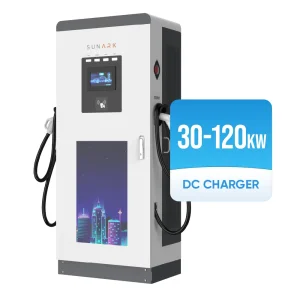
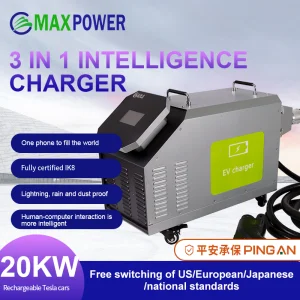
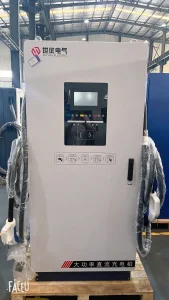
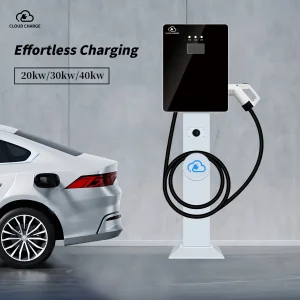
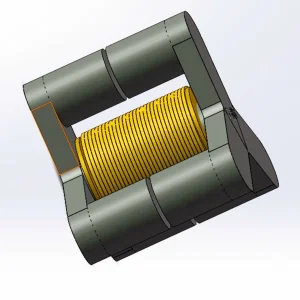
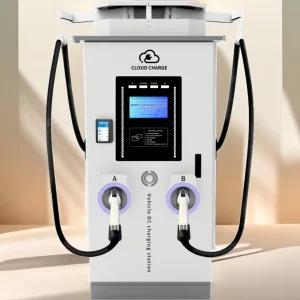
Explore our integrated array of utility-grade EV charging hardware, high-power DC fast-charging dispensers, and auxiliary precision power components engineered to scale with modern grid architectures.
The Technological Core of Future-Proof EV Charging Networks
As transportation electrification accelerates at an exponential rate, global power distribution grids face unprecedented localized strains. Electric vehicle (EV) fleet operators, commercial properties, and residential complexes cannot depend solely on standard static power allocation. Dynamic Load Management (DLM) is the foundational engineering breakthrough that actively balances electricity consumption across multiple charging outlets in real-time, matching power delivery to the instantaneous available capacity of the electrical panel without tripping master circuit breakers.
Standard static charging systems assign a fixed, dedicated block of amperage to each EVSE (Electric Vehicle Supply Equipment). This rigid approach severely limits the number of vehicles that can charge concurrently. In contrast, a dynamic load management algorithm senses the ambient facility consumption—including HVAC systems, manufacturing lines, lighting, and computing servers—and continuously redirects remaining capacity to the plugged-in EVs. Through smart OCPP (Open Charge Point Protocol) integration, local hardware sensors, and cloud communication, DLM establishes a highly resilient local micro-grid.
By continually monitoring current draw at the main connection point, our smart DLM systems dynamically decrease the charger power outputs during peak operational hours, eliminating expensive utility demand penalties and risk of brownouts.
Unequal load distribution across three-phase power lines leads to system instability and phase failure. Our advanced DLM algorithms analyze three-phase loads in microsecond increments, intelligently redistributing single-phase vehicles to minimize neutral currents.
Seamlessly interface local photovoltaic (PV) generation and battery energy storage systems (BESS). Under excess solar generation, DLM prompts EV chargers to operate in high-current mode, acting as an optimal sink for green surplus power.
Why Procurement Professionals Choose Chinese Production Centers for Grid-Level Systems
1. End-to-End Vertical Supply Chain Integration
China’s manufacturing landscape, particularly within the Pearl River Delta, benefits from absolute concentration of key raw components. From raw copper cabling, toroidal transformer cores, dynamic smart meters, to advanced IGBT semiconductor modules—every link in the production value chain is localized. This minimizes logistics downtime, stabilizes lead times, and allows us to rapidly prototype and customize dynamic charge controller circuit boards (PCBA) within days rather than months.
2. Rapid Iteration and R&D Scalability
Deploying a DLM project requires robust software integration alongside heavy power electronics. Chinese manufacturers have developed massive engineering talents specialized in embedded C++, Linux OS on ARM chips, and OCPP API protocols. This expertise enables us to seamlessly tailor firmware interfaces to meet distinct regional requirements, such as Europe's ISO 15118 vehicle-to-grid communications and North America's strict UL safety frameworks.
3. Industrial Scale and Rigorous Quality Vetting
Operating out of state-of-the-art production centers, we implement advanced burn-in testing, simulated thermal chamber stresses, and automated optical inspections (AOI) to guarantee zero-defect shipments. By leveraging local automated component placement machines (SMT lines), we maintain low unit economics while achieving elite levels of reliability on safety-critical hardware.

"Our unified factory floor in China combines structural assembly, PCB design, high-voltage insulation testing, and smart load simulator systems under one roof, providing a seamless supply loop for world-class distributors."
A Global Beacon of Safety, Innovation, and Reliable Charging Architecture
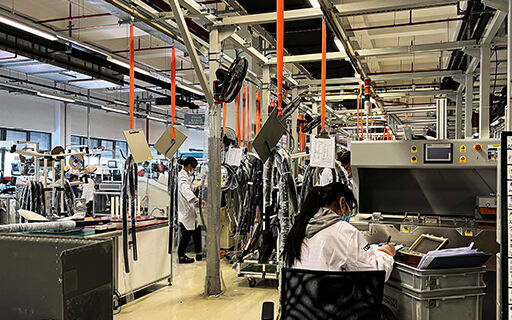
Guangzhou Amp Link Charger Co., Ltd. is a leading high-tech enterprise from China, specializing in the production, research, and sales of electric vehicle charging equipment. Our comprehensive product portfolio includes home AC charging stations, portable AC chargers, and DC fast charging stations.
Our corporate goal: is to build a first-class enterprise and create an international brand. Through our continuous and unremitting efforts, we have now exported our products to more than 20 countries, such as the United States, the United Kingdom, Germany, and France. Our products have passed CE, CQC, and other domestic and foreign authorities issued by the quality inspection certification, and the application of a number of invention patents in the product.
Our product development philosophy: safety as the first guide. The company attaches great importance to quality and technology, each product in the market before, has gone through a lot of testing and verification. We promise that all product parts are from strictly selected quality suppliers. The company will conduct regular checks on the products that have been marketed to ensure the excellent quality of the products and to eliminate cutting corners.
Whether you are our regular customers or new customers who just reached out to us for the first time, any questions of yours will be answered within the shortest time. And we have conscientious after-services, any problems with our products will be followed up on responsibly by our professionals until they're solved perfectly. We sincerely invite like-minded partners from all over the world to work with us, making the EV charger better and better. Together, Let's seize the opportunity of the golden age and forge ahead.
Adapting Smart Charging Protocols to Diverse Real-World Energy Profiles
High-density corporate hubs run intensive office equipment and climate systems simultaneously. Deploying 60kw, 80kw, and 90kw AC chargers with localized Dynamic Load Management ensures employee vehicles recharge throughout the day without driving up the corporate park's utility tariff bracket. Our solutions seamlessly throttle charge speeds when facility consumption spikes.
Most apartment structures have strict electrical supply constraints. Incorporating our dynamic load controllers with home EV charging stations permits the installation of up to 4x more charging stations than traditionally calculated. When tenants come home and cook, charger power consumption drops; overnight, it scales back to maximum speeds.
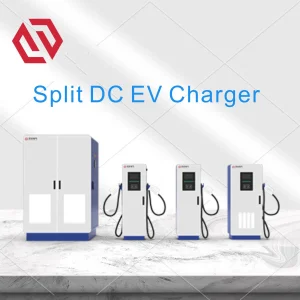
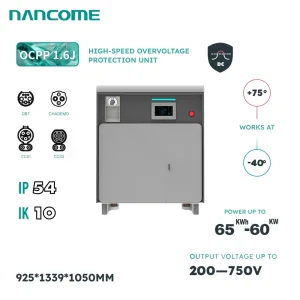
Logistics fleets deploying high-volume vehicles require immense power draws. Utilizing our split-type 320kw, 360kw, or massive 640kw DC charging cabinets, operations can dynamically allocate power. When an electric truck sits empty, its charger draws full kW; as it tops off, the spare capacity shifts instantly to arriving trucks.
Aligning Engineering Specifications, Certification Frameworks, and Regional Regulatory Compliance
Enterprise-grade procurement goes far beyond purchasing simple hardware. It involves auditing internal network protocols, ensuring component safety, and validating structural certifications. Global organizations face complex local realities. In Europe, the CE certification, MID (Measuring Instruments Directive) compliance, and Type 2 plug standardization are non-negotiable. In the Americas, UL, FCC Part 15, and CCS1 (Combo) compatibility determine access to projects. Our product designs reflect these demands, offering versatile, globally-certified units ready for site-specific integration.
Get Answers to Critical Technical Questions Regarding System Integration, Safety, and Customization
Static load management divides a set power capacity equally among all active chargers. For example, if you have a 100A supply and 4 chargers, each is locked at 25A maximum, even if only one car is plugged in. Dynamic Load Management (DLM) shifts power in real-time. If only one car is charging, it receives the full 100A; as more cars connect, the system safely adjusts power limits on-the-fly, ensuring the total limit is never exceeded.
Our engineering processes verify regional compliance through strict product designs: CE-marked systems for European grids, FCC and UL-compliant designs for North American projects, and CQC-certified configurations for domestic distribution. We build flexibility into our control software so settings can be customized to match local utility codes and grid regulations.
Yes. Many of our premium EV charging stations support solar panel integration. Through OCPP 1.6J/2.0.1 or direct Modbus inputs, our control software tracks excess solar generation and battery levels, directing surplus green energy directly into the vehicles instead of letting it feed back into the grid.
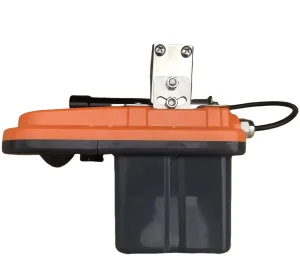
A typical setup includes current transformer (CT) clamps or a digital smart energy meter at the main breaker board, connected to the charging network via RS485 Modbus wiring or a local Ethernet network. The chargers communicate with each other locally, ensuring that load balancing continues to function safely even if the facility temporarily loses its internet connection.
Explore our high-power DC fast-charging dispensers, smart portable systems, and precision components designed for high-uptime environments.
 Amp Link Charger