Engineered for mission-critical reliability, our flagship dynamic smart chargers are deployed across enterprise, municipal, and commercial grids worldwide.
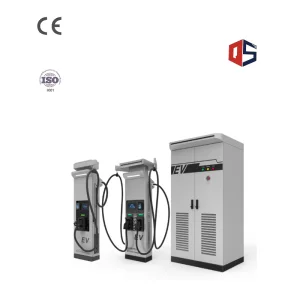

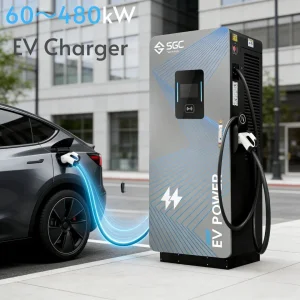
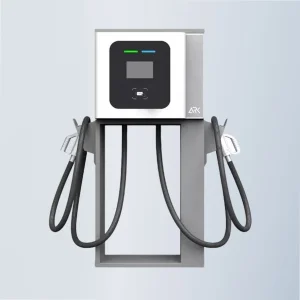
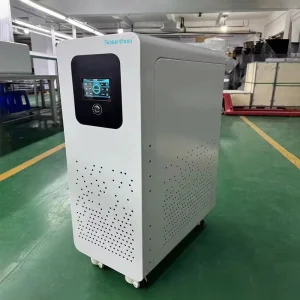
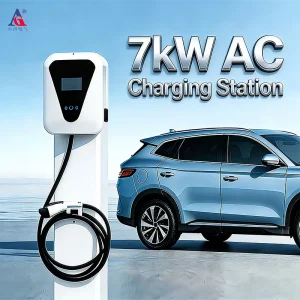
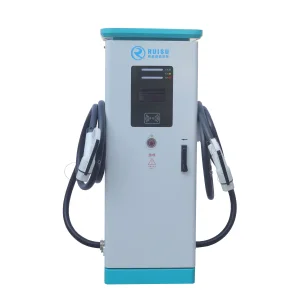
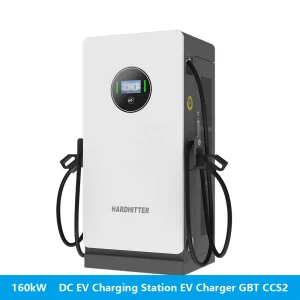
Modern electrical grids demand high-frequency orchestration between charging hardware, commercial facilities, and software backends. At Guangzhou Amp Link Charger Co., Ltd., we engineer our hardware to natively implement the Open Charge Point Protocol (OCPP 1.6J and 2.0.1 via WebSockets). This guarantees seamless communication with any third-party Central System (CSMS) without vendor lock-in.
Our CPMS enables operators to execute precise control loops over their infrastructure, unlocking automated smart-charging strategies including:

Countries Deployed
Max DC Output Power
CE & CQC Compliant
Field Defect Rate
Operating EV hardware globally requires absolute adherence to electrical safety, grid integration, and electromagnetic compatibility laws. Our infrastructure meets all rigorous global directives.
Full compliance with IEC/EN 61851-1 and IEC/EN 61851-23. Features over-current, short-circuit, over-voltage, under-voltage, ground fault (Type B RCD or 30mA AC + 6mA DC protection), surge protection, and integrated over-temperature foldback.
Certified under EN 301 489-1/-17 and EN IEC 61000-6-2/-4. Engineered to limit harmonic distortion on local grids while preserving communication integrity in high-frequency municipal environments.
Natively integrated protocols conform to local distribution grid requirements. Support for automated demand-response programs through OpenADR standards, allowing utility networks to balance grid load on demand.

Our headquarters and production facilities in Guangzhou leverage the world's most mature electronics and power supply ecosystem. This geographic and logistical advantage translates directly into competitive cost efficiency and speed-to-market for international buyers.
Guangzhou Amp Link Charger Co., Ltd. controls every phase of the value chain:
Charging Point Management must adapt to local grid environments and distinct operational realities. Discover how our systems scale across major commercial sectors.
Designed for urban hubs and highway plazas. The charging equipment seamlessly interfaces with global credit card readers, POS terminals, and local digital payment apps via secure OCPP payment transaction APIs.
For logistics, heavy delivery, or corporate vehicle networks. Integrates with telematics platforms (e.g., Geotab) to prioritize fast charging for vehicles scheduled for early departures while trickle-charging the remainder.
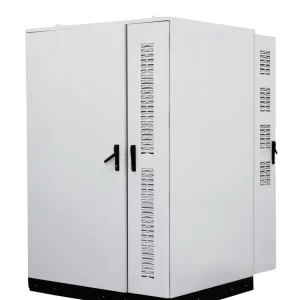
Integrates solar panels, lithium energy storage cabinets, and DC fast chargers on a unified local busbar. The local controller dictates power flows based on peak grid cost warnings and battery state-of-health.
Explore the engineering and logical specifications behind commercial Charging Point Management Systems.
OCPP 1.6J relies on JSON messages sent over WebSockets. This connection structure allows charging units to bypass restrictive firewalls and maintain bidirectionality, enabling immediate commands (like Remote Stop/Start) and real-time smart power management.
All our charging hardware undergoes evaluation against IEC 61851-1 (general charging system standard) and IEC 61851-23 (direct current fast chargers). CE markings are validated by accredited third-party laboratories to guarantee strict safety standards.
Yes. Our DC and AC systems feature custom thermal pathways, internal condensation control heaters, and IP54/IP55 industrial enclosures, allowing normal operations across temperatures ranging from -30°C to +55°C.
Absolutely. We provide comprehensive OEM/ODM solutions, accommodating custom case designs, custom color schemes, specialized branding overlays, customized software interfaces, and localized language configurations.
Standard manufacturing timelines average 25 to 35 days, depending on hardware complexity, custom features, and batch size. Our factory logistics team coordinates with regional shipping networks for global distribution.
We provide a standard 2-year warranty with optional extensions. Our service infrastructure provides remote technical support, diagnostic analysis, and modular replacement components for field operations.
Explore our high-capacity energy storage systems, custom hybrid chargers, and high-current hardware configurations.
 Amp Link Charger