As electric vehicles (EVs) gain traction worldwide, understanding how to choose an EV charging solution for home becomes crucial. According to a recent report by the International Energy Agency, there were over 10 million electric vehicles on the road globally by 2023, highlighting the increasing need for convenient home charging options. Proper charging infrastructure is essential for maximizing EV ownership benefits.
Industry expert Dr. Emma Blue, a prominent figure in sustainable energy solutions, emphasizes, “Choosing the right charging solution can significantly enhance your EV experience.” This statement echoes the reality of many homeowners, who often overlook critical factors such as charging speed, compatibility, and installation costs. Selecting the wrong charger can lead to inadequacies in performance and frustration for EV users.
Navigating the range of products can be overwhelming. Different EV models have varying charging capabilities, which directly impacts decision-making. Insights from market analyses indicate that smart charging systems, which adapt to energy prices, are becoming increasingly popular. However, consumers should reflect on their unique needs and regional electricity costs when exploring their options. Ultimately, the choice of a home EV charging solution should cater to individual lifestyles and future technological developments, making informed decisions vital.
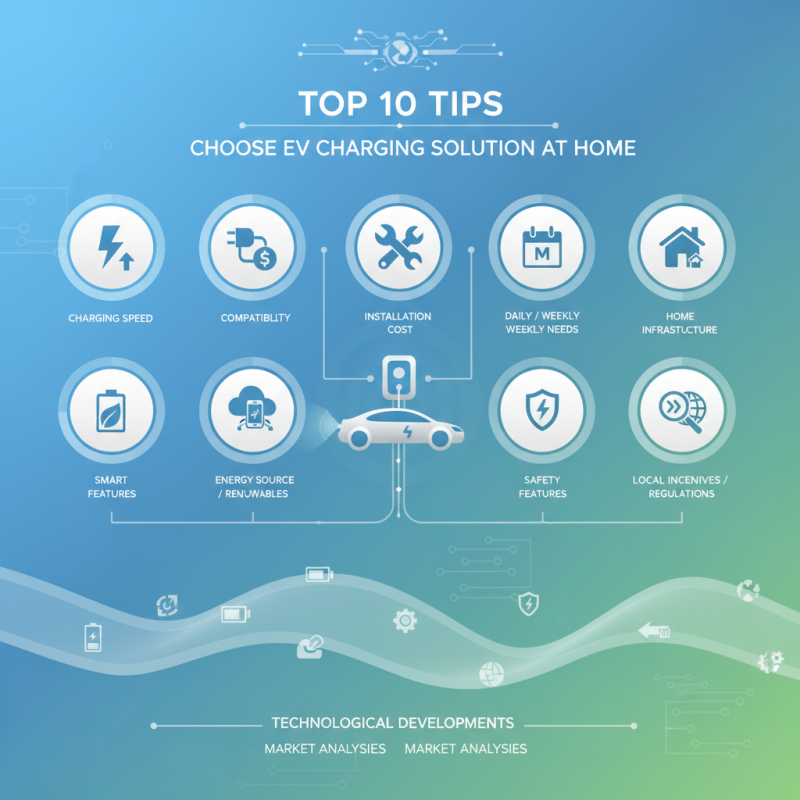
Understanding Your EV Charging Needs and Usage Patterns
When selecting an EV charging solution, understanding your specific charging needs and usage patterns is crucial. Consider how often you drive and the average distance. A daily commutation of 30 miles requires a different charging capacity compared to a 100-mile journey. Many users underestimate their actual needs, leading to insufficient charging solutions.
Evaluate your home’s electrical capacity. If improvements are necessary, this can impact the overall cost. Installing a high-capacity charger might not make sense without proper home wiring. Think about your daily routine. Do you leave for work early or return late? This can affect the type of charger you choose.
It's essential to analyze your charging habits. Do you prefer overnight charging or quick top-ups during the day? This may influence your decision on speed and type of charger. Assess the available installation space as well. A cluttered garage might not accommodate larger equipment. Take time to reflect on these factors. Making an impulsive decision could lead to frustration down the line.
Evaluating Different Types of EV Chargers for Home Installation
When choosing an EV charger for home use, consider the different types available.
Level 1 chargers are the most basic.
They use standard household outlets. Although they’re easy to install, charging is slow. You may have to leave your vehicle plugged in overnight.
Is that practical for your routine?
Level 2 chargers are another option.
They provide faster charging and require a dedicated circuit. This means professional installation.
It can be costly, but it’s often worth it. If you drive long distances, a Level 2 charger can save you time.
However, some may find the upfront costs daunting.
Lastly, think about smart chargers.
These connect to your home Wi-Fi. They allow remote monitoring and scheduling.
While convenient, they can be more complex. Some users struggle with connectivity issues.
It’s essential to weigh these pros and cons carefully. Your choice should reflect your needs and lifestyle.
Considering Electrical Infrastructure and Installation Requirements
When choosing an EV charging solution at home, consider your electrical infrastructure carefully. The average home in the U.S. has a panel rated between 100 to 200 amps. According to the U.S. Department of Energy, upgrading your electrical panel can cost from
$1,000 to $3,000. This investment ensures sufficient power for your EV charger, especially if you also run multiple appliances.
Installation requirements vary widely. Some homes may need a dedicated circuit for an EV charger. In older houses, this might involve rewiring. A recent study found that 30% of homes may not meet the ideal setup for Level 2 chargers. If your circuit isn't up to par, charging times can significantly increase. It’s essential to assess whether your existing wiring can handle the additional load. Keep in mind that hiring a licensed electrician may add to your costs, but this step is crucial for safety and efficiency.
Evaluate your charging needs. Daily driving habits dictate charging speed. If you drive 30 miles daily, a Level 1 charger may suffice; however, for longer trips, a Level 2 charger is better. Remember, the installation process might reveal aspects of your electrical system that require immediate attention.
Anticipating these challenges will help avoid unexpected expenses later on.
Identifying Smart Features and Compatibility with Your EV Model
Choosing the right EV charging solution for your home is essential. Start by assessing the compatibility of the charger with your electric vehicle (EV) model. Not all chargers work with every EV. Check the specifications from the manufacturer. Ensure the charger can deliver the appropriate power level for your specific vehicle.
Smart features can enhance your charging experience. Look for chargers that offer Wi-Fi connectivity or mobile app controls. These features allow remote monitoring of your charging status. This can be particularly useful for managing energy costs. Additionally, some chargers provide scheduled charging times. This can significantly optimize your energy usage and save money during off-peak hours.
Consider the physical installation space for your charger. Measure your garage or driveway area. You want the charger within reach of your vehicle while maintaining safety. Flexibility in installation is also critical. Some chargers can be wall-mounted or installed on pedestals. Think about all these factors to ensure a harmonious integration with your home and vehicle needs.
Assessing Cost, Incentives, and Maintenance for EV Charging Solutions
When choosing an EV charging solution for home use, cost is a crucial factor. Initial installation expenses can vary. Some systems may require electrical upgrades, which add to the total cost. It's essential to get quotes from multiple installers. Ask about hidden costs, like permits and labor. Understanding these costs upfront helps avoid surprises later.
Incentives can significantly influence your decision. Many areas offer tax credits or rebates for installing EV chargers. This can reduce the financial burden. It’s worth spending time researching local incentives. They can vary greatly, so don't overlook any opportunities. Additionally, consider maintenance requirements. Some chargers require more upkeep than others. Regular checks may be needed to ensure efficiency.
Not every solution fits every home. Space limitations can affect placement. Check your garage or driveway. Also, think about how often you charge. If you have multiple EVs, a higher-capacity charger might be necessary. Reflect on your long-term needs versus current demands. This often leads to better decisions in the future. Choose wisely, as the right solution can enhance the EV experience at home.
FAQS
: Assess your electrical panel. Most U.S. homes have 100 to 200 amp ratings.
Upgrading can range from $1,000 to $3,000. This is vital for adequate power supply.
Many homes may require it, especially older ones. Rewiring might be necessary.
It’s crucial to evaluate your wiring. Inadequate circuits can slow charging times significantly.
Installation costs fluctuate based on upgrades and hidden expenses like permits.
Yes, many regions offer tax credits or rebates. Research local opportunities carefully.
Daily mileage determines charger type—Level 1 may work for short drives, Level 2 for longer trips.
Chargers vary in maintenance needs. Regular checks ensure ongoing efficiency.
Space in your garage or driveway is key. Always consider your charging habits.
Reflect on long-term usage. Planning ahead helps in choosing a suitable charger.
Conclusion
When considering how to choose an EV charging solution for home use, it's crucial to start by understanding your specific charging needs and usage patterns. This involves evaluating how often and how quickly you intend to charge your electric vehicle, which can influence the type of charger you select. Next, assess the different types of EV chargers available, such as Level 1 and Level 2 chargers, to determine which fits best with your needs and home installation capabilities.
Additionally, it's essential to consider your home's electrical infrastructure and requirements for installation, ensuring that it can support the charger you choose. Smart features that enhance the charging experience, such as scheduling and compatibility with your EV model, should also be taken into account. Finally, evaluating the overall costs, available incentives, and ongoing maintenance required for the charging solution will help you make an informed decision that leads to a satisfactory and efficient home charging experience.

 Amp Link Charger