In the rapidly evolving electric vehicle (EV) landscape, charging speed remains a pivotal factor for consumers. The question "Why some EVs charge faster than others" often arises. According to Dr. Emily Zhang, a leading expert in EV technology, “Battery chemistry and infrastructure play critical roles in charging efficiency.” Her insights shed light on the complexities behind charging rates.
Different EV models utilize various battery technologies. Lithium-ion and solid-state batteries have distinct characteristics that impact charging times. Infrastructure also varies significantly across regions, affecting availability and speed of charging stations. Many users find themselves frustrated when their vehicle does not charge as quickly as anticipated. This inconsistency can influence purchasing decisions.
Understanding why some EVs charge faster than others can be daunting. Manufacturers often emphasize speed, but design compromises exist. Various factors, from thermal management to charging protocols, influence performance. The experience of users varies widely, creating room for improvements. As the EV market matures, continuous examination of charging technology will be essential for progress.
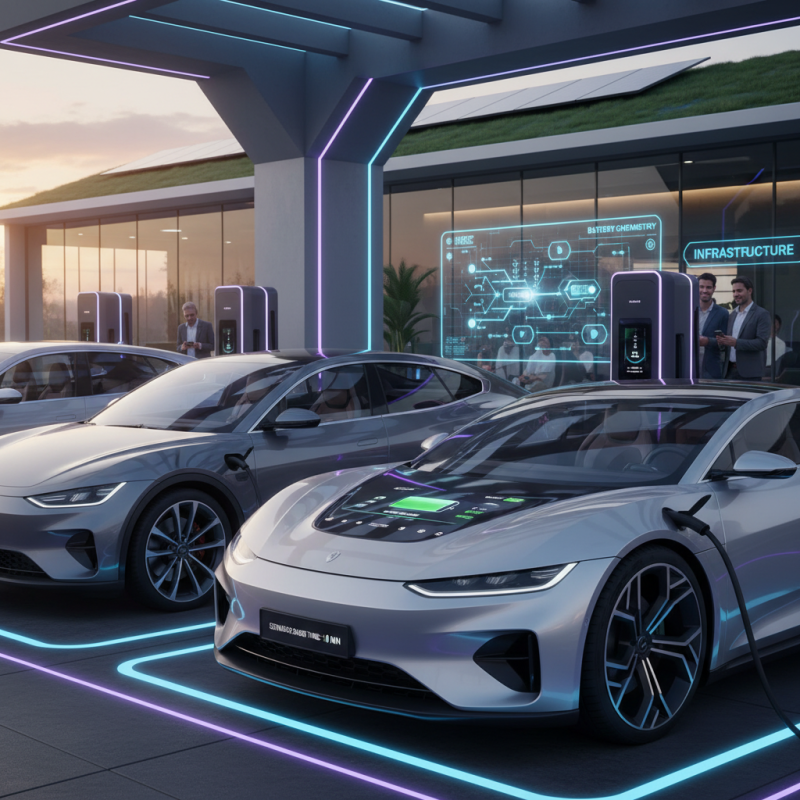
In 2026, the charging speed of electric vehicles (EVs) varies significantly. This difference often depends on the battery technology used. Some EVs employ advanced lithium-ion batteries that support higher charging rates. Others may stick with older technologies that limit speed and efficiency. Battery chemistry plays a critical role here.
Another significant factor is the power output of charging stations. Not all stations provide the same level of output. A vehicle designed for high-capacity fast charging will perform poorly on lower-output stations. This mismatch can frustrate users. The infrastructure around charging is still evolving, leading to inconsistencies in user experience.
Additionally, the thermal management systems in EVs affect charging speeds. Some vehicles handle heat far better than others, allowing for rapid charging without overheating. This aspect is often overlooked but crucial for long-term battery health. Collectively, these factors highlight the complexities of EV charging speeds in 2026. Awareness of these nuances can help consumers make informed choices when purchasing an electric vehicle.
The chemistry of a battery significantly impacts charging rates in electric vehicles (EVs). In 2026, advancements in lithium-ion technology could lead to faster charging times. Research indicates that lithium titanate batteries can charge up to ten times faster than traditional lithium-ion variants. This faster charging ability stems from their unique solid-state structure, allowing for increased ion movement.
Solid-state batteries represent another breakthrough. They use solid electrolytes instead of liquid ones. This innovation can double the energy density and improve safety. A recent study from the International Energy Agency suggests that the adoption of solid-state technology will rise significantly, impacting charging infrastructure. Faster charge times mean improved range and convenience for users.
However, not all manufacturers will uniformly adopt these technologies. There can be production challenges and cost barriers. Moreover, battery performance can vary based on temperature and usage patterns. Such variability can lead to inconsistent charging experiences across different models. The ongoing evolution in battery chemistry will shape the future of EV charging dynamics significantly.
In 2026, the charging speed of electric vehicles (EVs) varies significantly. A crucial factor is the charging infrastructure. High-capacity chargers can deliver power much faster. However, not all locations offer these advanced systems. This discrepancy creates a gap in charging efficiency.
Every EV has a limit to how quickly it can accept power. Some models support faster charging, while others lag. The quality of local charging stations greatly impacts performance. Areas with modern stations and robust power supplies enable quicker charge times. In contrast, regions lacking these resources slow down the process.
Tips: When planning long trips, research charging stations along your route. Look for those with high-capacity chargers. Additionally, keep your vehicle's software updated for optimal charging performance. Remember, charging speed can also depend on weather conditions, so be prepared for variations. Alternative charging options, like home setups, may help in maintaining convenience and accessibility.
In 2026, the speed at which electric vehicles (EVs) charge can vary significantly. A major factor influencing this is the power output of EV chargers, measured in kilowatts (kW). Chargers with higher kW ratings can supply more power, allowing EVs to charge faster. For instance, a 150 kW charger can recharge a compatible EV battery from 20% to 80% in about 30 minutes, while a 50 kW charger may take over an hour for the same task.
Understanding kW ratings is crucial. Higher ratings don’t always guarantee successful fast charging. Some EVs can only handle a certain maximum input. An EV designed for 100 kW charging will not benefit from a 250 kW charger. This mismatch can lead to inefficiencies. According to industry reports, charging infrastructure needs to match vehicle capabilities to maximize efficiency.
Tips: Always check your EV’s charging capacity. This ensures you choose the right charger. Not all charging stations provide the same power output. Therefore, select a station compatible with your vehicle. Pay attention to changes in charging time under different conditions. Factors like temperature and battery age can affect charging speeds significantly.
As electric vehicles (EVs) become mainstream, their charging speeds are increasingly influenced by consumer preferences and market trends. Many buyers prioritize quick charging as a key feature. This creates competition among manufacturers. Some opt for advanced technologies, while others stick to basic systems that can fall short of expectations. This difference can lead to frustration for users who expect fast turnaround times.
Understanding charging speeds helps consumers make better choices. The market is shifting towards higher power charging stations. These stations can recharge cars significantly faster than older models. In contrast, older charging infrastructures continue to lag, impacting user experience. Managing expectations is crucial as not all EVs will meet the rapid charging standards that consumers desire.
Tips for consumers: research charging options before purchasing an EV. Consider how charging speed aligns with your lifestyle. If you drive long distances, prioritize models designed for rapid charging. Additionally, keep an eye on evolving technologies. They may offer solutions that fit your needs better as the market grows.
| Vehicle Type | Battery Capacity (kWh) | Max Charge Power (kW) | Charge Time (0-80%) | Charging Standard | Market Preference (%) |
|---|---|---|---|---|---|
| Compact EV | 50 | 100 | 30 min | CCS2 | 35 |
| Mid-size SUV | 75 | 150 | 40 min | CCS2 | 45 |
| Luxury Sedan | 100 | 250 | 25 min | CCS2 | 50 |
| Pickup Truck | 90 | 180 | 35 min | CCS2 | 40 |
| Crossover | 65 | 120 | 50 min | CCS2 | 30 |
: Battery chemistry plays a crucial role in determining how quickly an EV can charge.
By 2026, improvements in lithium-ion technology may result in faster charging times for electric vehicles.
Lithium titanate batteries can charge up to ten times faster due to their unique solid-state structure.
Solid-state batteries can double energy density and enhance safety by using solid electrolytes instead of liquids.
Variability in battery performance can occur due to temperature and usage patterns, leading to inconsistent charging experiences.
Understanding kW ratings helps EV owners choose chargers that match their vehicle's capabilities for more efficient charging.
Chargers with higher kW ratings can supply more power, allowing for faster charging of compatible EV batteries.
If an EV can only handle up to 100 kW, using a 250 kW charger won't improve charging speed and may cause inefficiencies.
Owners should choose stations compatible with their vehicle's charging capacity to ensure effective charging.
Charging speeds can vary significantly based on environmental conditions and the age of the battery, affecting overall efficiency.
As electric vehicles (EVs) continue to evolve, understanding why some EVs charge faster than others in 2026 becomes crucial for consumers and manufacturers alike. Charging speed varies significantly due to multiple factors, including battery chemistry, which influences how quickly energy can be absorbed. Advanced battery technologies tend to support higher charging rates, allowing for quicker recharges.
Moreover, the availability and quality of charging infrastructure play a pivotal role in vehicle performance. Higher power output from charging stations, measured in kilowatts (kW), enables faster charging but requires compatibility with the vehicle's design. Additionally, consumer preferences and emerging market trends are shaping the landscape of EV charging speeds, pushing manufacturers to innovate in response to demand. Understanding these dynamics is essential for anyone looking to navigate the future of electric mobility effectively.

Amp Link Charger