Long-distance EV travel feels simple until the battery drops faster than expected. Cold rain, strong headwinds, heavy luggage, and steep roads can change the calculation quickly. Understanding how to plan EV charging for long trips helps drivers replace guesswork with practical decisions. A reliable plan considers the vehicle’s usable battery capacity, real highway range, charging speed, and available stations along the route.
Begin with the manufacturer’s charging guidance and the vehicle’s navigation system. Then verify each planned charger through a trusted charging network or official station database. Check connector compatibility, operating hours, payment requirements, and recent availability. A station may appear on a map but remain busy, offline, or difficult to access. Small details matter.
Leave with a comfortable battery reserve. Ten percent may be too little in unfamiliar areas. A larger buffer can protect against detours, weather, or unexpected queues. Fast charging is not always faster overall. A dependable 150-kilowatt station may serve a trip better than a higher-rated charger with poor reliability. Plan useful stops near restrooms, food, or safe walking areas, and allow the battery to warm when necessary.
Plans can fail sometimes. That is part of the lesson. Recheck conditions before departure, and keep one backup charger beyond your target. Experienced EV drivers adjust instead of forcing the original route. Careful preparation makes the journey calmer, but flexibility remains essential.
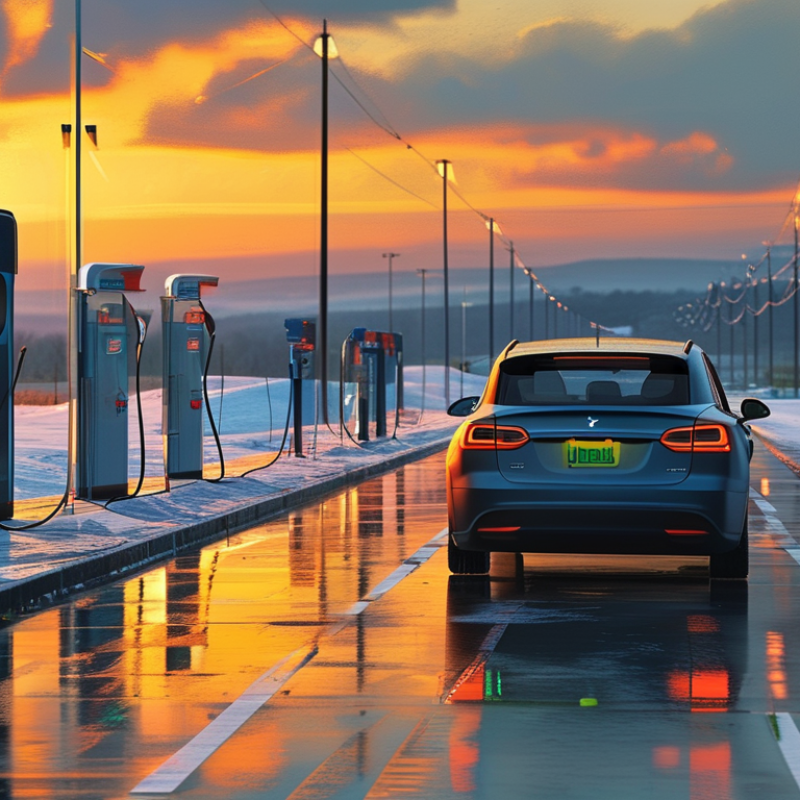
How to Plan EV Charging for Long Trips?
Define your route before checking charging locations. Mark the starting point, major stops, steep roads, and your destination. Then estimate realistic driving range, not the number shown under ideal conditions. Cold weather, strong winds, heavy luggage, and high speeds can reduce range noticeably. Leave a safety reserve of at least 15 percent when possible. It feels conservative, but unexpected delays happen.
Your charging needs depend on distance, battery size, road conditions, and station power. Plan one main charging stop and one backup option for longer sections. Check operating hours, payment requirements, connector compatibility, and recent availability before departure. A short stop from 20 to 70 percent may be more efficient than waiting for a full charge. I once planned too tightly and lost time after a busy station had no open space. That mistake changed my approach: route plans need flexibility, not just accurate mileage.
Tips: Charge fully before leaving if convenient. Avoid arriving with a nearly empty battery. Keep navigation updated during the trip. Watch your energy use during the first hour. If consumption rises, reduce speed slightly and adjust the next stop. Save offline route details in case mobile service disappears. Take a brief break while charging, but confirm the session has started before walking away.
Define your route, driving range, and charging needs before departure. This example uses a 720 km journey, a 75 kWh usable battery, an average consumption of 18 kWh per 100 km, and a 20% safety reserve.
Planning insight: The vehicle uses about 18 kWh for every 100 km. Charging before the battery falls below the safety reserve helps maintain flexibility for traffic, weather, elevation changes, and detours.
Long-distance EV planning starts with the route, not the battery percentage. Map every realistic charging stop before leaving home. Check connector type, charging speed, access hours, and payment requirements. A compatible station must match your vehicle’s inlet and charging system. Some sites list several plugs, but only one may suit your car. Keep a second option within 10 to 20 miles. Detours happen.
Use the vehicle manual and official charging directories to verify technical details. Look for recent availability data, although it can change quickly. A station marked available may become occupied before you arrive. Plan around your usable battery range, not the advertised maximum. Weather, hills, traffic, cargo, and cabin heating can reduce distance. On a winter trip, I would reserve more energy than usual. That margin feels wasteful until a charger is blocked. Then it matters.
At each stop, confirm the connector before parking. Check the cable reach, stall layout, and whether the charger is operational. If charging slows unexpectedly, inspect the vehicle settings and station instructions before assuming a fault. Carry the relevant account access or payment method in advance. Offline directions are useful where mobile coverage is weak. My route plans have been too optimistic. A shorter charging session is not always better. Leaving with enough energy for the next verified station creates a calmer, safer drive.
| Planning Dimension | What to Check | Relevant Data | Route-Planning Action | Compatibility Risk |
|---|---|---|---|---|
| Vehicle inlet | Match the vehicle's AC and DC charging connectors. | Common standards include Type 1, Type 2, CCS1, CCS2, NACS and CHAdeMO. Connector availability varies by region and vehicle. | Filter route stops by the exact connector required by the vehicle. Do not assume that an AC inlet supports DC charging. | High |
| Charging method | Determine whether the stop is for overnight charging or a short travel break. | AC Level 2 charging commonly operates around 7–22 kW. DC fast charging commonly ranges from about 50–350 kW, subject to vehicle and site limits. | Use AC charging for hotels, workplaces or long stays; select DC charging for highway stops and short breaks. | Medium |
| Vehicle charging limit | Compare the vehicle's maximum AC and DC input power with the charger's rated output. | A charger rated at 150 kW will not deliver 150 kW if the vehicle accepts only 100 kW under the current conditions. | Use the lower of the vehicle limit and charger rating when estimating charging time. | High |
| Usable battery capacity | Plan with usable energy rather than the battery's gross capacity. | Usable capacity is the energy available for driving; the displayed battery percentage may not represent the full gross pack capacity. | Use the vehicle's official usable-capacity figure and leave a reserve for detours, weather and elevation changes. | Medium |
| Expected energy consumption | Account for speed, temperature, wind, payload, terrain and heating or cooling. | Energy use generally increases at higher motorway speeds and in cold weather. Official test-cycle efficiency is not a guarantee of trip consumption. | Use recent real-world consumption data and add a practical reserve, commonly 10–20% of expected trip energy. | High |
| Arrival state of charge | Check whether the planned arrival percentage is sufficient if a charger is occupied or unavailable. | A low arrival state of charge increases dependence on a single location and leaves less flexibility for a diversion. | Set a minimum arrival reserve appropriate to road conditions, typically higher in remote areas or severe weather. | High |
| Charging curve | Check how charging power changes as the battery fills. | DC charging usually slows as the battery approaches a high state of charge. The peak power is normally available only for part of the session. | For faster stops, plan the energy needed for the next leg instead of routinely charging to 100%. | Medium |
| Station availability | Verify operating status, access hours, number of compatible stalls and recent availability. | A listed charger may be occupied, out of service, restricted to certain users or located behind a locked entrance. | Identify at least one compatible backup location before starting a long or remote leg. | High |
| Payment and access | Confirm whether payment requires contactless payment, a mobile application, an account or another access method. | Payment methods and authentication requirements differ by location and jurisdiction. | Prepare an accepted payment method before reaching the stop; keep a backup option where available. | Medium |
| Cable requirement | Determine whether the station provides a tethered cable or requires the driver's own cable. | Many DC fast chargers provide a fixed cable, while some AC points require a separate compatible cable. | Carry the correct portable AC cable and verify its current and connector ratings before departure. | Medium |
| Site location | Check whether the charger is safely accessible from the planned direction of travel. | Some sites are inside car parks, service areas or private properties and may require an entrance fee or a separate access route. | Confirm the exact map position, opening hours, parking rules and return route to the main road. | Medium |
| Backup planning | Measure the distance and energy required to reach an alternative charger. | A backup is useful when a primary site has limited stalls, uncertain status or a long distance to the next location. | Choose a backup that is compatible, reachable with the planned reserve and positioned before the battery becomes critical. | Low when prepared |
| Planning note: Charger power, connector availability, access conditions and operating status can change. Confirm the vehicle manual, the charging location's current information and local road conditions before departure. | ||||
Estimate charging time, costs, and required stops before leaving. Start with your usable battery capacity, not its advertised size. For example, a 75 kWh battery using 20 kWh per 100 kilometers offers about 375 kilometers of theoretical range. Weather, speed, traffic, and cabin heating can reduce it sharply. IEA’s Global EV Outlook 2024 reports more than four million public charging points worldwide at the end of 2023. Availability is improving, but rural coverage remains uneven. Plan your first stop before the battery falls below 20 percent.
Charging time depends on power and battery limits. A 150 kW charger cannot force a vehicle to accept 150 kW continuously. Charging usually slows above 80 percent. The U.S. Department of Energy’s Alternative Fuels Data Center estimates that DC fast charging can add roughly 100 to 200 miles in 30 minutes. Calculate costs with this formula: energy added in kWh multiplied by the local price per kWh. Add parking or session fees when applicable. A 40 kWh session at $0.35 per kWh costs about $14. My estimates are never perfect. Real conditions matter.
Tips: Keep a 15 percent energy reserve for detours and cold weather. Compare two nearby charging sites, not one. Check opening hours and payment access before departure. Shorter stops may work better than one long session. IEA data shows public charging growth is strong, yet demand is growing too. A quiet route can still become busy during holidays. Recheck the plan before driving.
Long EV trips require more than checking distance. Weather, traffic, and terrain can change your energy needs quickly. Cold temperatures may reduce battery efficiency, while strong wind increases resistance. Heavy rain can also slow traffic and extend driving time. Plan each charging stop with a safety buffer, rather than arriving with only a few miles remaining.
Traffic deserves equal attention. A route that looks simple at 8 a.m. may become crowded by afternoon. Delays can consume energy through repeated acceleration and heating or cooling. Check live traffic before departure and review charger status shortly before reaching each location. Do not rely on one charging site. Keep at least one backup within practical range, especially in rural areas or during holidays. I still sometimes plan too tightly, and that is a useful warning.
Charge before the battery gets low. Check the forecast and wind conditions. Confirm opening hours, payment access, and current availability. Carry suitable cables, but avoid unnecessary equipment. If a station has several occupied connectors, leave early for the backup site. A short meal break can become a long wait when demand rises. Record which stops worked well, because real travel experience often reveals problems that route planners miss.
Planning an electric-vehicle trip is not a one-time task. Conditions can change within minutes. The International Energy Agency reported over four million public charging points worldwide at the end of 2023. Yet availability still varies sharply between highways, towns, and remote areas.
I check the next charger after leaving the current one. Traffic, rain, cold weather, and strong headwinds can reduce efficiency. A 20-minute delay may also create a queue at a busy station. If the estimated arrival charge falls below my safety margin, I slow down and select an earlier charger. If the station shows faults or long waiting times, I reroute before the battery becomes critical. The U.S. Department of Energy’s Alternative Fuels Data Center recommends checking station status, connector compatibility, and operating hours. A map pin is not proof of a working charger.
Small details matter. I keep the cabin temperature reasonable, avoid unnecessary acceleration, and watch energy use over the last 30 miles. Winter trips need more caution. The European Environment Agency has reported that temperature and driving conditions materially affect electric-vehicle energy consumption. My original plan is often too optimistic. I have trusted a predicted arrival percentage without allowing for hills, wind, or a full parking area. That mistake is avoidable, but not impossible. Recalculate at every stop. Keep a backup location within reach. Four extra minutes of planning can prevent an uncomfortable final mile.
: Mark your start, destination, major stops, steep roads, and possible delays. Use realistic range, not the ideal dashboard estimate. Keep at least 15% battery as a safety reserve. It feels cautious.
Cold weather, strong headwinds, high speeds, hills, traffic, and heavy luggage consume more energy. Cabin heating can also reduce range noticeably. Watch consumption during the first hour. Plans can be too optimistic.
Plan one main charging stop and one backup for longer sections. Choose the first charger before the battery drops below 20%. Keep another location within practical driving reach. Do not rely on one map pin.
A short session from 20% to 70% may save time. Charging usually slows after 80%. A high-power charger cannot force the vehicle to accept maximum power continuously. Stop earlier when the next section is short.
Charging time depends on battery limits, charger power, starting charge, and temperature. A fast charger may add roughly 100 to 200 miles in 30 minutes. Actual results vary. Allow extra time.
Multiply the energy added in kilowatt-hours by the local price per kilowatt-hour. For example, 40 kWh at $0.35 per kWh costs about $14. Include parking or session fees when applicable. Estimates are imperfect.
Check operating hours, connector compatibility, payment access, and recent availability. Confirm that the charging session has started before leaving the vehicle. A listed station may be occupied, faulty, or closed. Check twice.
Recalculate after each charging stop. Traffic, rain, cold, hills, and headwinds can lower the arrival charge. If the estimate falls below your reserve, reduce speed slightly and choose an earlier charger. Reroute before the battery becomes critical.
Save offline route details before departure. Record the backup charger, connector type, and expected arrival charge. Keep navigation updated whenever service returns. Small preparation helps.
How to plan EV charging for long trips begins with understanding your route, driving distance, vehicle range, and personal charging needs. Before departure, identify compatible charging stations along the planned route and consider their locations, charging speeds, operating hours, and accessibility. Estimate how long each charging stop may take, how much it could cost, and how many stops are needed to complete the journey comfortably. Leaving a reasonable battery reserve can help reduce stress if conditions change.
A reliable plan should also account for weather, traffic, elevation, road conditions, and possible charger congestion or unavailability. In colder weather, heavy traffic, or strong winds, an electric vehicle may use more energy than expected. During the journey, check your remaining range and road conditions regularly, then adjust your route or charging stops when necessary. Flexible planning, backup charging options, and timely decisions can make long-distance EV travel safer, smoother, and more predictable.

Amp Link Charger