How to Integrate Solar Energy with EV Chargers? This question is becoming practical, not theoretical. The International Energy Agency reports that global electric car sales exceeded 17 million in 2024. Electric vehicles represented more than 20% of new car sales worldwide. Meanwhile, IRENA recorded 585 gigawatts of new renewable capacity in 2024. Solar power provided the largest share. These figures show why charging and generation should be planned together.
How solar energy integrates with EV chargers depends on timing, system design, and local electricity rules. A 30-kilowatt rooftop array may produce strong output around noon, while a vehicle arrives after work. Smart charging can delay charging, match solar production, or use a home battery for evening demand. Energy meters, inverter controls, and compatible charging equipment make this coordination measurable. Without those controls, solar electricity may still flow to the grid instead of the vehicle.
The arithmetic is not always neat. Weather changes, battery limits, and seasonal demand can reduce expected savings. A professional assessment should examine roof orientation, annual driving distance, charger power, grid capacity, and safety requirements. The U.S. Department of Energy emphasizes managed charging as a way to reduce peak demand and improve grid flexibility. However, one design cannot fit every property. A rural depot, apartment garage, and family driveway need different solutions. This guide examines the equipment, operating logic, financial trade-offs, and practical steps behind reliable solar-powered EV charging. Performance claims should be verified with measured energy data, not optimistic marketing.
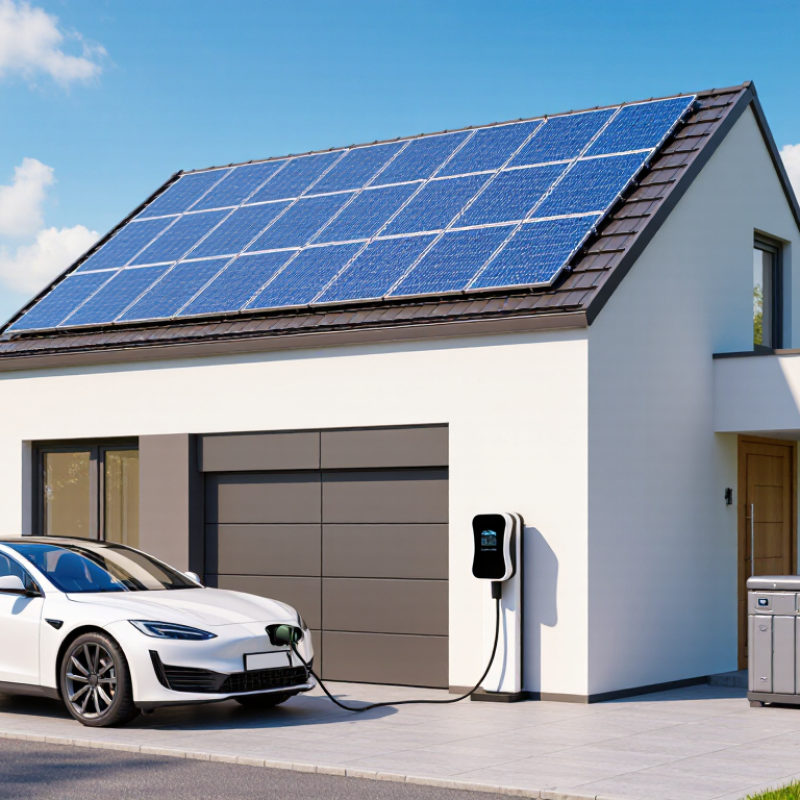
Before connecting solar panels to an EV charger, measure the site instead of guessing from roof size. Record roof orientation, pitch, shading, and usable area throughout the day. A nearby tree can reduce afternoon production more than expected. Local solar data improves estimates, but a site visit reveals details databases may miss. Check the electrical service, panel capacity, cable route, and weather exposure. These practical checks prevent an attractive plan from becoming an expensive correction.
Charging needs depend on driving habits, not battery size alone. Ask how many miles the vehicle travels each week and when it usually returns home. A typical EV may use 0.25 to 0.35 kilowatt-hours per mile. Winter heating, hills, and traffic can increase that figure. Charging overnight may suit the household better than relying on daytime sunlight. Keep an electricity log for several weeks. Real data beats assumptions.
Compare solar production with charging demand by hour. If solar generation peaks while the vehicle is away, direct charging may offer limited value. A qualified electrician can assess load limits, protection devices, grounding, and local installation requirements. Battery storage may help, but its cost and maintenance deserve careful review.
My early estimates have sometimes looked too optimistic after shading was measured. That is a useful warning: forecasts need regular adjustment as habits, seasons, and electricity use change.
How to Integrate Solar Energy with EV Chargers?
Choose a Solar Power System and EV Charger Configuration
Electric vehicle adoption is accelerating. The IEA’s Global EV Outlook 2024 reports more than 17 million electric cars were sold worldwide in 2024. Charging demand is growing with it. A solar system can reduce grid consumption, but only when its capacity matches driving habits and household loads.
A practical configuration combines rooftop solar, a grid-tied inverter, and a smart EV charger. IRENA’s Renewable Capacity Statistics 2024 recorded 345.5 GW of new solar capacity worldwide in 2023, showing solar’s expanding role. For a home, a 6 kW solar array may support daytime charging, especially when the vehicle is parked during working hours. A 7.4 kW charger can deliver faster charging, but it may exceed midday solar output. Dynamic load management can reduce grid imports and prevent household circuits from overloading.
Battery storage is optional, not automatically necessary. It can move afternoon solar energy into evening charging, although its cost and losses require careful evaluation. The weak point is variability. Clouds matter. Winter matters more. The IEA also reported over four million public charging points globally by the end of 2023, yet home charging remains valuable for predictable daily mileage. Site surveys should check roof orientation, inverter limits, cable distance, and local electrical requirements. A smaller charger may sometimes deliver better economics. That conclusion deserves testing with real electricity bills, not assumptions.
| Configuration | Typical Solar Array | Inverter Capacity | EV Charger Rating | Optional Battery Storage | Estimated Daily Solar Generation | Typical EV Energy Delivered per Day | Solar-to-EV Operating Strategy | Recommended Application |
|---|---|---|---|---|---|---|---|---|
| Small Residential Solar Charging | 3–5 kW DC Approximately 7–12 panels, depending on panel output |
3–5 kW AC | 7.4 kW AC, single-phase | Not required; 5–10 kWh can improve evening charging | Approximately 10–20 kWh Based on about 4 equivalent peak-sun hours |
Approximately 10–18 kWh Enough for roughly 50–90 km of driving, depending on vehicle efficiency |
Charge the vehicle during daylight and modulate charging power to follow available solar output | Homes with one EV, moderate daily driving, and limited roof area |
| Medium Home Solar Plus Smart Charger | 6–8 kW DC Approximately 14–20 panels |
5–8 kW AC | 7.4–11 kW AC, single- or three-phase | 10–15 kWh recommended for evening or overnight charging | Approximately 20–32 kWh | Approximately 18–28 kWh Enough for roughly 90–140 km of driving |
Prioritize household loads, then charge the EV with surplus solar; use the battery when solar production falls | Households with one or two EVs and regular daytime solar availability |
| Large Home Solar with Two EV Chargers | 9–12 kW DC Approximately 21–30 panels |
8–12 kW AC | Two 7.4 kW AC chargers with dynamic load management | 15–25 kWh recommended | Approximately 30–48 kWh | Approximately 25–40 kWh Enough for roughly 125–200 km of combined driving |
Limit total charging current so the solar system, battery, and household service are not overloaded | Large homes with two EVs, higher annual mileage, or multiple daily charging periods |
| Three-Phase Solar and Faster AC Charging | 10–15 kW DC | 10–15 kW AC, three-phase | 11–22 kW AC, subject to vehicle and electrical-service limits | 15–30 kWh optional | Approximately 35–60 kWh | Approximately 30–50 kWh Enough for roughly 150–250 km of driving |
Use three-phase power to distribute charging load evenly and enable higher charging rates when solar output is sufficient | Properties with three-phase electrical service, high mileage, or short charging windows |
| Solar Plus Battery for Evening EV Charging | 6–10 kW DC | 5–10 kW hybrid inverter | 7.4–11 kW AC | 15–30 kWh usable capacity | Approximately 20–40 kWh | Approximately 15–30 kWh shifted from daytime solar to evening charging | Store surplus midday production, then discharge the battery to charge the EV after sunset; retain reserve capacity for backup loads | Homes where the vehicle is usually parked and charged at night |
| Commercial Workplace Solar Charging | 30–100 kW DC | 25–100 kW AC | Multiple 11–22 kW AC chargers | 30–150 kWh, depending on demand-management goals | Approximately 100–400 kWh | Approximately 80–300 kWh | Schedule charging during working hours, prioritize solar surplus, and cap aggregate charger demand during peak periods | Offices, business parks, hotels, and fleet parking areas with daytime vehicle dwell time |
| Solar-Assisted DC Fast Charging | 100–500 kW DC | 100–500 kW AC or grid-connected power-conversion equipment | 50–150 kW DC per charging point | 100–500 kWh recommended to reduce grid peaks | Approximately 350–2,000 kWh | Approximately 250–1,500 kWh | Combine solar generation, battery buffering, and grid power; the battery supplies short-duration high-power charging peaks | Public charging hubs, highway locations, and commercial fleets requiring rapid turnaround |
Integrating solar energy with EV chargers begins with a clear electrical path. Solar panels produce DC power, while most charging equipment uses controlled AC power. An inverter converts and manages this energy for the building and vehicle. A qualified installer should confirm panel output, charger capacity, cable size, and local grid requirements before installation. Small errors can cause wasted energy or repeated shutdowns. Measure twice.
A battery adds flexibility when sunlight changes. During bright midday hours, solar power can charge the vehicle directly or fill the battery. In the evening, stored energy can support slower charging without drawing as much from the grid. A smart energy management system should prioritize household loads, battery protection, and EV charging safely. Set charging limits according to battery condition and available solar capacity. Do not assume that a larger battery always improves the system. It may increase cost, maintenance, and conversion losses.
Reliable operation depends on monitoring, testing, and honest performance data. Install meters at the solar array, battery, home supply, and charger, then compare expected and actual energy flows. Weather, shading, seasonal sunlight, and driving habits can change results. In practice, a charger may pause when the home oven starts, which can surprise drivers. Clear controls and scheduled charging reduce that frustration. Review the system after several weeks, and adjust settings rather than hiding disappointing output. Safety devices, grounding, ventilation, and professional inspection remain essential throughout the equipment’s service life.
Efficient solar EV charging starts with accurate energy measurement. Install a certified energy meter near the main distribution board. It should track solar production, household demand, grid imports, and charger consumption. Without this data, the system may charge from the grid unnecessarily. Small details matter.
Set the energy management system to prioritize essential household loads. Then direct surplus solar power to the vehicle. For example, a 3.6 kW solar surplus can support a 3.6 kW charging session. If clouds reduce output, the charger should lower its current automatically. This prevents sudden grid purchases and avoids overloading the electrical connection. A minimum charging current may be necessary for stable operation. Check local electrical requirements before commissioning.
Use charging schedules when solar output is predictable. A daytime window from 10 a.m. to 4 p.m. often captures stronger production. Add a grid-import limit, such as 1 kW, when battery charging must continue. Keep a household battery reserve if evening power is important. Weather forecasts can improve decisions, but they are never perfect. A cloudy afternoon may interrupt charging. That is acceptable, but the driver needs a clear fallback schedule. Review actual energy data after several weeks. The first settings may look efficient, yet still waste power during short solar peaks. Adjust gradually, especially when household demand changes.
Solar-powered EV charging needs more than a large photovoltaic array. Operators should track daily solar yield, charging energy, battery state, and grid imports. The IEA Global EV Outlook 2024 reported almost 14 million electric car sales in 2023. That growth makes charger uptime and accurate energy data increasingly important.
A practical dashboard can flag low output before drivers notice it. Compare each string’s production with weather conditions and historical patterns. NREL research found a median photovoltaic degradation rate near 0.5% per year. So, gradual losses deserve attention too.
Clean modules, inspect connectors, and test inverters at scheduled intervals. A perfect forecast is impossible.
Safety monitoring should include insulation resistance, earth-fault protection, connector temperature, and emergency shutdown tests. Thermal imaging can reveal a hot terminal before it becomes a serious failure. Charging equipment should follow applicable electrical codes and IEC requirements. Keep firmware records and maintenance logs. Human review still matters; sensors can miss loose hardware or water entering a cable joint. For long-term reliability, inspect after storms, verify protective devices, and review abnormal charging sessions monthly. IEA PVPS Task 13 research also emphasizes availability tracking and consistent operational records for photovoltaic assets. A dashboard alone is not maintenance.
Solar panels produce direct-current electricity. An inverter converts it into controlled alternating current for the building and charger. A qualified installer should check panel output, charger capacity, cable size, grounding, and grid requirements. Measure twice.
A battery stores extra midday solar power. That energy can support slower vehicle charging after sunset. It also reduces grid demand when sunlight changes. A larger battery is not always better. It may increase cost, maintenance, and energy losses.
It should serve essential household loads before charging the vehicle. Then, it can direct surplus solar power to the charger. Battery protection should remain active. Safety comes before speed.
The charger should lower its current automatically. This helps prevent sudden grid imports and electrical overloads. A minimum charging current may be needed for stable operation. Cloudy periods can interrupt charging. That is normal, but the fallback plan must be clear.
A daytime window between 10 a.m. and 4 p.m. often captures useful solar production. Actual results depend on shading, weather, season, and household demand. A schedule may look efficient but still miss short solar peaks. Review it later.
Install meters near the solar array, battery, household supply, and charger. Track solar production, household demand, battery status, charging energy, and grid imports. Compare expected and actual flows each week. Numbers can expose wasted energy.
Check insulation resistance, earth-fault protection, connector temperature, grounding, ventilation, and emergency shutdown functions. Inspect cables after storms. Thermal imaging can reveal a hot terminal early. Sensors help, but they can miss loose hardware or water inside joints.
Compare daily production with weather conditions and earlier records. Inspect modules, connectors, inverters, and protective devices regularly. Track abnormal charging sessions every month. Slow losses may be easy to ignore. Honest records support better decisions.
Integrating solar energy with EV chargers begins by evaluating the site’s sunlight exposure, available roof or ground space, household electricity use, and vehicle charging requirements. How solar energy integrates with EV chargers depends on selecting a suitable combination of solar panels, an inverter, and a compatible charger. Battery storage may also be included to retain excess solar power and support charging when sunlight is limited or electricity demand is high.
The system should be installed with proper electrical connections among the panels, inverter, battery, home distribution equipment, and charging unit. An energy management system can prioritize household needs, direct surplus solar power to the vehicle, and schedule charging during the most efficient periods. Regular monitoring helps track solar production, charging performance, energy savings, and system alerts. Routine inspections, software updates, electrical safety checks, and professional maintenance can help ensure reliable operation and extend the service life of the complete solar EV charging system.

Amp Link Charger