Why indoor vs outdoor EV chargers differ is not merely a question of where a vehicle is parked. The installation site changes what a charger must withstand and how it should be fitted. Indoors, a garage can shield equipment from rain, direct sunlight, and temperature swings. Outdoors, a charger may face wind-driven water, dust, heat, frost, and accidental knocks. Small details matter.
EV charging specialist Tom Moloughney’s practical guidance can be paraphrased this way: “Match the charger to the conditions it will face.” That principle helps explain why outdoor models often need stronger weather protection, durable enclosures, and carefully sealed connections. Indoor installations may have fewer environmental demands, but cable routing, ventilation, and available electrical capacity still deserve attention. A dry garage is not automatically a perfect site.
The differences also affect daily use. An outdoor unit may need a longer cable to reach a driveway, while a garage setup can keep the cable neatly beside a parked car. Installation costs can vary with wiring distance, wall materials, and the electrical panel’s location. No single option fits every home. Some assumptions deserve a second look: a covered porch may still expose equipment to blowing rain, while a garage can become very hot. Understanding these conditions makes it easier to compare charger specifications and plan a safe, reliable installation. The details are easy to overlook.
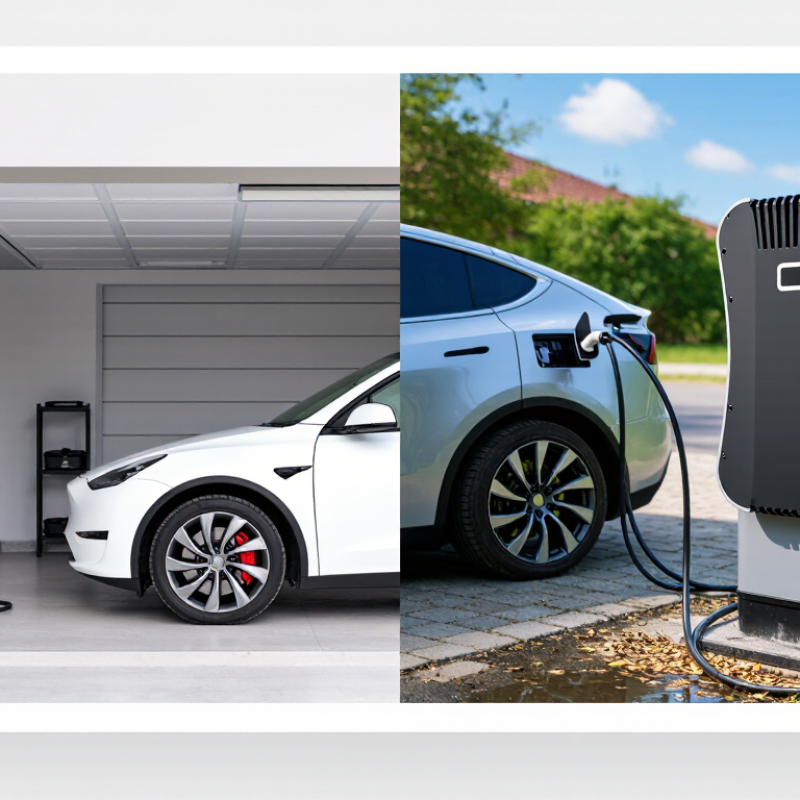
Indoor and outdoor EV chargers face different environmental stresses. A garage may stay dry, yet it can collect dust, vehicle exhaust, and heat from poor ventilation. Cold mornings can also make cables stiff. Check the charger’s stated operating range and installation guidance, rather than assuming a sheltered space is always mild.
Outside, rain is only part of the problem. Direct sunlight can heat the casing and fade materials over time. Wind-driven water, blowing dust, and repeated freezing and thawing can test seals and connections. In coastal areas, salty air may accelerate corrosion. Placement matters: a wall beneath an eave offers some shelter, but the unit still needs suitable outdoor protection. Keep it clear of standing water and likely vehicle impacts.
It is easy to focus only on water resistance. That misses heat, cold, sunlight, and everyday wear. An installer can assess the wall, cable route, and local exposure before choosing equipment rated for the setting. I would not assume that “indoors” means low risk; a damp, unventilated garage can be harsher than a sheltered exterior wall. Small details matter.
Example enclosure protection ratings show how chargers may be designed for different environmental exposure. Ratings vary by model and are not universal requirements.
How to read this chart: IP ratings use separate scales for solid-particle protection (first digit) and water protection (second digit). In this example, IP20 provides level 2 solid-object protection and level 0 water protection; IP54 provides level 5 dust protection and level 4 splash-water protection. The two scales should not be compared directly.
An EV charger enclosure does more than hide wiring. It shields electrical parts from the conditions around them. Indoors, the main concerns are often dust, accidental knocks, and heat from nearby equipment. A compact enclosure may work well in a garage, where rain and direct sunlight are not constant threats. Even there, ventilation and access for inspection matter.
Outdoor units face a tougher mix. Rain can reach seams, while sunlight warms the housing and gradually weakens some plastics. Wind may carry grit into openings. For these locations, designers use weather-resistant seals, UV-stable materials, and corrosion-resistant fasteners. Drainage also matters: water should not collect around cable entries or the enclosure base. Weather changes everything.
A tightly sealed case is not automatically a better case. Heat still needs a way to escape, and a technician needs room to inspect connections safely. In cold climates, moisture can freeze around covers; in hot ones, direct sun can raise internal temperatures. The right enclosure balances protection with cooling, cable routing, and service access. Location details matter. A sheltered wall beside a garage door is different from an exposed post near a driveway. It is easy to overlook that difference. Choosing an enclosure by appearance alone can leave practical problems for later.
Indoor and outdoor EV chargers face different electrical risks. A garage unit may encounter dust, condensation, and accidental impact. An outdoor unit must also withstand rain, windblown debris, and temperature swings. Its enclosure, cable glands, and connectors need suitable weather protection; a covered location alone does not make indoor-rated equipment safe outdoors. Small details matter. Water can enter through a loose fitting.
The National Electrical Code’s Article 625 addresses EV charging equipment, including installation and protection requirements. Installers should follow the equipment’s listing and instructions, use appropriately rated enclosures, and provide required ground-fault protection. A charger’s ingress-protection rating describes resistance to dust and water, not every hazard. It does not replace correct wiring, grounding, or inspection. Standards are specific; assumptions are not.
Reliability deserves attention, too. A 2023 Nature Energy field study by Rempel and colleagues assessed 657 public fast-charging plugs in the San Francisco Bay Area; 73.3% were functional during testing. The study did not attribute failures to weather, so that figure should not be read as an outdoor-weather failure rate. Still, it shows why regular checks matter. Look for cracked housings, damaged cables, loose seals, and corrosion, especially after storms. A quick visual check helps, but it cannot confirm internal electrical safety.
Installing an indoor EV charger often means working near a garage electrical panel, where cable routes and available circuit capacity shape the job. A qualified electrician can assess the supply, choose suitable protection, and confirm that the mounting surface supports the unit. Leave enough room to plug in without bending the cable sharply. Small detail. It matters.
Outdoor installation adds exposure to rain, dust, sunlight, and temperature swings. The charger and its enclosure must be rated for the location, and cable entries need careful sealing. Position the unit away from places where cars, lawn equipment, or snow shovels could strike it. A sheltered wall can help, but a roof alone does not make every device weather-suitable. Local electrical requirements and the equipment instructions should guide the final placement.
Maintenance differs, too. Indoors, check the cable, connector, and mounting points for wear, and keep the area clear of stored items. Outdoors, look for cracked seals, corrosion, loose fittings, and debris around vents or drainage paths. Never open energized equipment for a routine check; arrange service when damage appears. It is easy to focus on the charger and overlook the cable’s daily path. That is not always the part people get right. A simple monthly visual check can catch issues early, though it cannot replace professional inspection when something seems unusual.
Location changes what a charger must endure, not just where it is mounted. An indoor unit is shielded from rain, direct sunlight, and blowing dust. That protection can help preserve its casing, cable, and connectors. But a closed garage can become surprisingly hot in summer. Poor airflow may stress electronics or trigger temperature-related charging limits. Cold conditions can also affect charging, though the vehicle’s battery often plays a larger role.
It is easy to assume a garage is always the safer choice. That assumption can be wrong. An outdoor charger needs weather-resistant construction suited to its exposure, as specified by its manufacturer. A shaded wall may reduce heat and ultraviolet exposure, while a sheltered position helps keep rain from pooling around the plug. Still, wind can drive moisture into places that look protected. Small details matter: a cable dragged across gritty concrete wears faster, and a connector left in a puddle is asking for trouble. Keep connections clean and dry, and avoid tight cable bends. Placement should also allow comfortable access without stretching the cord. If a spot routinely gets extreme heat, freezing temperatures, or standing water, ask a qualified installer about alternatives. The best location is not always obvious.
| Factor | Indoor Installation | Outdoor Installation | Effect on Performance and Lifespan |
|---|---|---|---|
| Weather exposure | Protected from direct rain, snow, and most wind-driven debris. | Exposed to rain, snow, wind, and changing weather unless sheltered. | Outdoor units need an enclosure and installation location approved for the expected exposure. Weather-rated equipment helps prevent moisture and debris from reaching electrical components. |
| Enclosure rating | The required rating depends on the room and the chance of dust, water, or impact. | Choose a charger specifically approved for outdoor use; check its stated IP or NEMA enclosure rating and installation instructions. | An enclosure rating describes protection against specified ingress or environmental hazards. It does not make a unit suitable for every climate or installation condition. |
| Operating temperature | Often experiences smaller temperature swings, especially in conditioned spaces. | May experience hot summers, cold winters, and rapid temperature changes. | Charging equipment operates within manufacturer-specified temperature limits. Extreme temperatures may cause protective power reduction or shutdown; the exact range varies by model. |
| Direct sunlight | Usually has little or no direct UV exposure. | May receive prolonged sunlight, which can heat the enclosure and age exposed plastics or cable jackets over time. | A shaded position can reduce heat and UV exposure. Use equipment and cable materials rated for the installation environment. |
| Moisture and condensation | Generally has less exposure, although damp garages and condensation can still occur. | Rain, humidity, snow, and condensation can increase exposure to moisture. | Correct outdoor-rated equipment, cable entries, mounting, and installation help manage moisture. Never use equipment with damaged seals or a compromised enclosure. |
| Corrosion risk | Typically lower in dry, climate-controlled areas. | Can be higher in coastal areas, places exposed to road salt, or persistently humid environments. | Corrosion can affect exposed hardware and electrical connections. Follow the manufacturer’s guidance for suitable materials, siting, and inspection. |
| Charging speed | Not inherently faster or slower because it is indoors. | Not inherently faster or slower because it is outdoors. | Charging power is primarily determined by the EVSE, the vehicle’s onboard charger, and the available electrical supply. Temperature-related limits may affect operation when specified by the equipment or vehicle. |
| Cable and connector wear | Less exposure to sunlight, precipitation, and outdoor temperature extremes. | Cable and connector are more exposed to weather, abrasion, and accidental damage. | Store the connector as directed and keep the cable off the ground when practical. Inspect for cuts, cracks, loose parts, or other damage. |
| Installation and mounting | Must suit the indoor location, electrical supply, and applicable local requirements. | Must also suit outdoor exposure, drainage, mounting surface, and safe cable access. | Installation by a qualified professional, in accordance with the equipment instructions and local electrical rules, helps avoid faults and unsafe operation. |
| Maintenance needs | Usually requires routine checks for damage, dust, and secure mounting. | Benefits from regular checks for weather damage, debris, corrosion, and deteriorated seals or cables. | Follow the manufacturer’s inspection and cleaning instructions. Disconnect or stop using equipment that appears damaged, and arrange assessment by a qualified professional. |
| Expected service life | Protected conditions can reduce exposure to some environmental stresses. | Service life depends on the unit’s outdoor suitability, installation, climate, use, and maintenance. | Location alone does not determine lifespan. Use the manufacturer’s rated equipment and conditions; there is no single service-life figure that applies to all chargers. |
Note: Always check the charger’s installation manual, environmental ratings, operating-temperature range, and local electrical requirements. An outdoor installation should use equipment explicitly approved for that use.
Not always. A closed garage can trap heat, dust, and vehicle exhaust. Poor airflow may affect charger performance.
Direct sun, wind-driven rain, blowing dust, and repeated freezing can stress its casing and connections. Coastal salt may speed corrosion.
No. An eave can reduce direct rain, but wind may still drive moisture toward the unit. Keep it away from standing water.
Yes. A hot, poorly ventilated garage may cause temperature-related charging limits. Cold conditions can stiffen cables.
Route it without tight bends or gritty surfaces. A cable dragged across concrete can wear faster. Small details matter.
Keep it clean and dry, away from puddles. A connector left in water may be damaged.
Check heat, cold, sunlight, water, cable access, and possible vehicle impacts. The best location is not always obvious.
Yes. A qualified installer can review the wall, cable route, and local exposure. I would not assume a garage is mild.
Why indoor vs outdoor EV chargers differ comes down to the conditions each unit must handle. Indoor chargers are generally protected from rain, direct sunlight, dust, and large temperature swings, while outdoor units face moisture, wind, debris, heat, and cold. These differences influence enclosure design: outdoor chargers typically need more robust weather protection and materials suited to prolonged exposure, while indoor models can often use simpler housings.
Electrical safety and reliable operation matter in both settings, but outdoor installations require particular attention to weather-resistant connections, suitable placement, and protection from physical damage. Installation and maintenance also vary: indoor chargers may be easier to access and inspect, whereas outdoor units may need regular checks for wear, water intrusion, and buildup around vents or connectors. Exposure to environmental stress can affect charging performance and lifespan, so choosing a charger suited to its location helps support dependable use over time.

Amp Link Charger