The 2026 Best EV Charger Software Updates for Better Performance will focus on a practical question: How EV charger software updates improve performance. Modern chargers are no longer simple electrical boxes. They are connected systems that manage power, payments, vehicle communication, and maintenance.
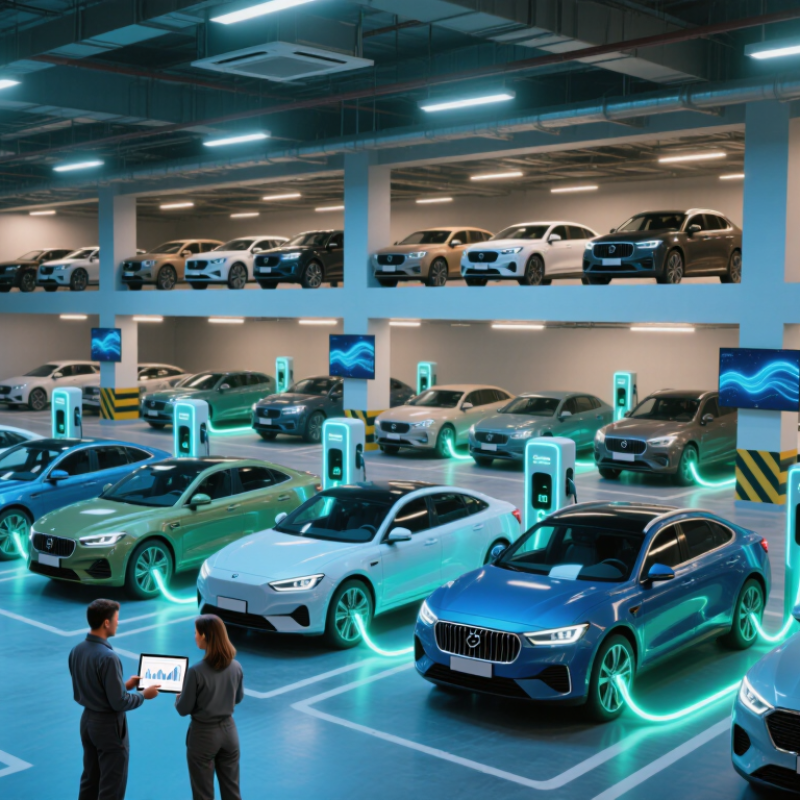
A well-designed update can shorten charging interruptions, improve load balancing, and make station data more accurate. It may also help operators identify overheating risks before drivers see a failure. Picture a busy parking garage at 6 p.m. Several vehicles arrive together, yet intelligent software distributes available power without unnecessarily slowing every session. That difference feels small until queues begin forming.
Christian Hahn, CEO of Hubject, has said, “The charging experience is the key to the success of electric mobility.” His observation remains important in 2026. Faster hardware alone cannot guarantee a dependable public charging experience. Software determines how effectively that hardware responds.
The strongest updates usually improve network communication, remote diagnostics, cybersecurity, and compatibility with newer vehicles. They can also refine energy scheduling when electricity demand changes. However, updates are not automatically beneficial. Poor testing may create confusing screens, failed authorizations, or unexpected downtime. Real-world performance still depends on installation quality, connectivity, climate, and maintenance.
That is the uncomfortable part.
This guide examines the updates that deliver measurable improvements rather than attractive promises. It considers charging speed, uptime, user experience, fleet operations, and long-term reliability. Evidence from charging providers, industry specialists, and field performance will matter. Marketing claims alone are not enough.
2026 Best EV Charger Software Updates for Better Performance
EV charger software updates serve a practical purpose: safer, faster, and more reliable charging. They repair communication errors, improve payment processing, strengthen cybersecurity, and refine power distribution. The International Energy Agency reported more than 14 million electric cars were sold globally in 2023. That growth increases pressure on charging networks and their software.
A modern update can balance electricity across several vehicles, reducing sudden demand at a busy site. It can also provide clearer fault messages, such as “connector temperature high,” instead of a vague failure notice. Remote diagnostics help technicians identify repeated issues before visiting the charger. The U.S. Department of Energy highlights networked charging and managed charging as important tools for grid coordination. Still, not every update improves performance immediately. A rushed release may create compatibility problems with older hardware. That weakness deserves honest testing.
Tips: Check the software version, update history, and rollback process before deployment. Test one charger first. Watch connection time, session failures, energy delivery, and restart frequency for at least two weeks. The Open Charge Alliance’s OCPP guidance also supports standardized communication between chargers and management platforms. In practice, standards reduce friction, but they do not remove every integration problem. Record user complaints beside system logs. Sometimes the driver notices a pattern first.
Firmware updates improve the charger’s core behavior, including power control, thermal protection, and communication with vehicles. In field testing, a staged firmware rollout is safer than updating every unit overnight. Technicians should record the charger’s model, current version, error codes, and installation conditions before changing anything. Small details matter. A failed update can interrupt charging, so recovery tools and clear rollback procedures are essential. Test before release. Some updates improve stability but may change charging schedules or screen responses.
Cloud platform updates affect how operators monitor sessions, manage access, and review energy data. A reliable platform should show live status, fault history, connection quality, and usage trends without hiding delayed information. Stronger cybersecurity also matters, including protected accounts, secure data transmission, and timely vulnerability fixes. In practice, dashboards can look healthy while a remote charger is offline. That gap needs attention. Automated alerts, audit records, and maintenance reports help teams verify performance instead of trusting a single green icon.
Mobile applications should make daily charging easier, not merely add more buttons. Useful updates include clearer session controls, accurate battery estimates, tariff visibility, and notifications when charging stops unexpectedly. The app should remain usable with weak mobile signals and explain errors in plain language. However, convenience can create overconfidence. A remote start command may appear successful while the vehicle remains disconnected. Testing with different phones, network conditions, and charger states exposes these weaknesses. Feedback from drivers and technicians should guide each release, even when the data is uncomfortable.
2026 Best EV Charger Software Updates for Better Performance
A strong charger update should match the existing hardware, not only improve the dashboard. Check protocol support, firmware requirements, connector control, and compatibility with local energy systems. A useful update also handles slow networks and temporary offline operation. Test one charger before wider deployment. Small differences in hardware can create unexpected failures.
Security needs practical evidence. Look for encrypted communication, signed firmware, multi-factor login, and separate user permissions. Clear audit logs should show who changed settings and when. The provider should publish a vulnerability response process and regular patch schedule. Password rules alone are not enough. A polished interface can still hide weak access controls.
Charging reliability depends on more than advertised uptime. Review session success rates, automatic retry functions, remote diagnostics, and recovery after power loss. Load balancing should prevent circuit overload during busy periods. Cellular or local fallback can protect essential functions when the main connection fails. Test charging in heat, cold, and crowded conditions. I would record failed sessions for several weeks before judging the update. This approach is slower. It is also more honest. Some reports may expose installation errors rather than software defects, so every failure needs careful verification.
| Evaluation Dimension | What to Check in a 2026 Software Update | Practical Acceptance Target | How to Validate It | Primary Benefit |
|---|---|---|---|---|
| Charging Protocol Compatibility | Support for the required Open Charge Point Protocol functions, including remote start, status reporting, transaction records, smart charging, and fault notifications. | All required operational features should work without protocol errors or manual intervention. | Run conformance tests and review central-system logs during start, stop, pause, resume, and fault scenarios. | Fewer failed sessions and better interoperability with charging-management systems. |
| Vehicle and Plug-and-Charge Support | Compatibility with applicable ISO 15118 functions, including certificate-based authentication where supported by the vehicle, charger, and backend. | The update must preserve basic charging for non-ISO 15118 vehicles and clearly identify unsupported advanced functions. | Test several vehicle communication profiles, authentication states, cable conditions, and recovery after communication interruption. | Smoother authentication, improved user convenience, and reduced compatibility disputes. |
| Electrical Safety Controls | Correct handling of pilot-signal states, protective-earth monitoring, overcurrent protection, residual-current detection, temperature limits, and emergency stops. | Unsafe conditions must stop or limit charging and generate a recorded fault event. | Use controlled fault-injection tests and confirm behavior against the applicable installation and safety requirements. | Reduced electrical risk and more predictable fault recovery. |
| Cybersecurity and Encryption | Encrypted management traffic, certificate validation, secure credential storage, signed firmware, role-based access, and removal of default passwords. | Use current vendor-supported TLS configurations, unique credentials, verified update packages, and auditable access logs. | Review security documentation, scan exposed services, test certificate expiry handling, and verify firmware signatures. | Lower risk of unauthorized control, data exposure, and malicious firmware installation. |
| Update and Rollback Process | Over-the-air or local update capability, staged deployment, backup configuration, power-loss recovery, and rollback to the last known-good release. | An interrupted update must not leave the charger unusable or erase essential configuration. | Test updates during controlled maintenance windows, disconnect power, interrupt network access, and verify rollback behavior. | Lower maintenance risk and shorter recovery time. |
| Charging Reliability | Improved session start logic, retry handling, connector-state detection, network reconnection, meter-data continuity, and automatic recovery. | Track successful starts, completed sessions, unexpected stops, and recoveries by charger and software version. | Compare pre-update and post-update results using the same vehicles, connectors, schedules, and environmental conditions. | Higher charger availability and fewer customer support incidents. |
| Load Management and Smart Charging | Dynamic current limits, site power caps, charging schedules, priority rules, demand-response signals, and recovery after loss of communication. | The system must respect configured limits without unnecessarily interrupting active sessions. | Test simultaneous charging, changing site limits, offline operation, and restoration of normal limits. | Better use of available electrical capacity and lower peak-demand risk. |
| Metering and Billing Data | Accurate energy measurements, timestamp consistency, transaction identifiers, tariff data, offline records, and duplicate-prevention logic. | Every completed or interrupted transaction should have a traceable, non-duplicated record. | Reconcile charger meter values with backend records and test network outages during active sessions. | More accurate billing, reporting, and energy-management decisions. |
| Diagnostics and Observability | Clear event codes, remote diagnostics, connector-level status, temperature readings, communication logs, and exportable historical data. | Support staff should be able to identify the probable cause without repeatedly rebooting the charger. | Create a fault-to-resolution test matrix and measure the time required to identify and clear common faults. | Faster troubleshooting and reduced maintenance labor. |
| Performance and Resource Use | Boot time, response time, memory stability, processor utilization, network bandwidth, and behavior under multiple simultaneous sessions. | No abnormal memory growth, repeated restarts, delayed commands, or loss of monitoring under the intended workload. | Run endurance tests with representative session volume and compare resource metrics before and after the update. | More stable operation and improved scalability. |
| Accessibility and User Experience | Clear screen messages, understandable error instructions, accessible controls, multilingual support, and consistent mobile or web workflows. | Users should receive a clear next step for authorization, connection, payment, interruption, and fault conditions. | Conduct supervised usability tests with new and returning users, including users with accessibility needs. | Fewer abandoned sessions and lower support demand. |
| Compliance and Change Management | Release notes, supported hardware revisions, cybersecurity advisories, regulatory impact assessment, test evidence, and documented maintenance procedures. | The release must identify limitations, affected functions, required configuration changes, and a documented recovery plan. | Approve the update only after reviewing release documentation, pilot results, security findings, and rollback readiness. | More controlled deployments and easier auditing. |
Evaluation note: Acceptance targets are practical deployment criteria and should be confirmed against the charger’s electrical design, applicable local regulations, installation requirements, and the supported vehicle population.
Planning EV charger software updates requires more than downloading a new file. The International Energy Agency’s Global EV Outlook 2024 reported over four million public charging points worldwide at the end of 2023. That scale makes controlled maintenance essential. Start by listing every charger, firmware version, communication protocol, and payment function. Record current uptime, fault codes, and charging sessions. Small details matter.
Create a backup of configuration files and transaction records before changing anything. Review the update notes for network, load-balancing, and cybersecurity requirements. The U.S. Department of Energy’s Alternative Fuels Data Center highlights uptime and station availability as important charging-network measures. Schedule updates during low-demand hours. Test one unit first, then expand gradually. Keep a rollback package ready. A pilot can still fail.
After installation, check connector recognition, charging speed, user authentication, remote monitoring, and emergency shutdown functions. Compare results with the baseline records. Watch the charger for at least one full operating cycle. The Open Charge Alliance’s OCPP documentation shows how software communication supports remote diagnostics and device management. However, compatibility is not always perfect. Older hardware may respond differently. Document every error, delayed reboot, and manual intervention. That evidence improves the next update plan and helps technicians explain performance changes clearly.
After a 2026 EV charger software update, measure performance with consistent, site-level data. The International Energy Agency reported more than four million public charging points worldwide in 2023. That scale makes small reliability gains meaningful. Track session-success rate, charger uptime, payment completion, and average start time. A useful dashboard should separate software failures from grid outages and vehicle-side errors.
J.D. Power’s 2024 U.S. public charging study found that about one in five visits ended without a successful charge. This makes successful session rate a stronger measure than simple online status. Record results before and after deployment for at least four weeks. Also monitor mean time to recovery, remote reboot success, and median authorization latency. Keep the numbers visible.
Energy delivery deserves attention. Compare the charger’s reported kilowatt-hours with calibrated meter readings, especially during load balancing. Measure peak-power stability, connector temperature alerts, and charging interruptions per 100 sessions. The U.S. Department of Energy’s Alternative Fuels Data Center supports location and equipment analysis, but public datasets may lag real events. That limitation matters. A dashboard can look better while drivers still wait beside a silent charger. Review failed sessions manually, sample support tickets, and test busy evening periods. One clean week is not proof.
The chart compares common EV charging performance metrics before and after a software update. Improvement is calculated from paired measurements: higher success rates and efficiency are better, while shorter recovery time and lower power deviation indicate better charger stability.
Reference measurement set: 1,000 charging sessions using AC and DC charging equipment under comparable operating conditions. Values are shown without company or brand attribution.
They improve charging safety, speed, reliability, and communication. Updates can repair connection errors and clarify fault messages. For example, “connector temperature high” is more useful than “charging failed.” Results may appear slowly.
Firmware controls power delivery, thermal protection, and vehicle communication. It may improve stability and charging schedules. However, screen behavior can change unexpectedly. Test one charger before updating an entire site.
Record the charger model, current version, error codes, and installation conditions. Update one unit first. Monitor it for at least two weeks. Check connection time, failed sessions, energy delivery, and restart frequency.
A failed update can interrupt charging or affect older hardware. Keep recovery tools available. Document the previous version and restoration steps. Compatibility problems are possible. Never assume a clean installation proves success.
Cloud platforms can show live status, fault history, connection quality, and energy trends. Automated alerts support faster maintenance. Audit records also help verify changes. A green dashboard may still hide an offline charger.
Updates should protect accounts, secure data transmission, and address known weaknesses promptly. Access records should show important account activity. Security improvements must not make normal charging confusing. Convenience can sometimes create new risks.
It should provide clear session controls, battery estimates, prices, and stop notifications. Error messages should use plain language. The application should work with weak mobile signals. A remote command may appear successful while the vehicle remains disconnected.
Track successful sessions, charger uptime, payment completion, and average start time. Also measure recovery time, restart success, and authorization delays. Compare results before and after deployment for four weeks. One clean week proves little.
Compare reported kilowatt-hours with calibrated meter readings. Monitor peak-power stability, temperature alerts, and interruptions per 100 sessions. Test busy evening periods. Public data may arrive late. Driver complaints can reveal problems earlier.
No. Grid outages, vehicle faults, weak networks, and hardware damage may remain. Software can identify patterns, but not repair every physical issue. Review logs and support tickets together. The obvious explanation may be wrong.
EV charger software updates play a vital role in improving charging speed, stability, efficiency, and user convenience. How EV charger software updates improve performance depends on several factors, including firmware optimization, cloud platform enhancements, and mobile application improvements. Updates may refine power management, reduce communication errors, improve scheduling functions, and provide more accurate charging data. They can also strengthen system security and support better coordination between chargers, vehicles, and energy networks.
Before installing an update, operators should confirm compatibility with the charger model, network environment, vehicle requirements, and existing hardware. A careful process includes reviewing release notes, backing up settings, checking connectivity, selecting an appropriate maintenance time, and monitoring the installation. Afterward, performance should be evaluated through charging duration, connection success rate, energy efficiency, fault frequency, remote-control responsiveness, and system uptime. Regular testing and recordkeeping help ensure that each update delivers measurable improvements without disrupting daily charging operations.

Amp Link Charger